Quick answer: Most Southwest Florida pools lose about 1/8 to 1/4 inch of water a day to evaporation. That is a guideline, not a hard rule. If your pool is dropping more than that, or sits at the high end (around 1/4 inch a day) and keeps doing it, the bucket test will tell you whether it is evaporation or a possible leak. Never assume a loss in that range rules out a leak. If the test is close or confusing, a pro can confirm it.
Every fall the phone starts ringing at our shop in Nokomis: "My pool's dropping. Do I have a leak?"
Honest answer? Maybe. Maybe not. Down here a pool loses some water every day, and that is just the sun and wind doing their thing. The real question is whether your pool is losing more than the bucket sitting next to it.
The good news is you do not need fancy gear to find out. You need a bucket.
How Much Water Loss Is Normal?
About 1/8 to 1/4 inch per day is a typical range for a Florida pool. Heated pools, spas, pools with waterfalls or spillovers, and windy, dry weather all push the number up.
But please treat that as a guide. A pool losing 1/4 inch a day is on the high side, and it can still have a leak hiding in it. That is exactly why we like the bucket test: it compares your pool, on your weather, to an honest baseline.
Why It Feels Worse This Time of Year
From about October through March the air gets cooler, drier, and windier, and that pulls more water off the surface. The summer storms that were topping your pool off for free are gone, too.
So a pool that seemed fine all summer can "suddenly" start dropping in November. Sometimes that is the season. Sometimes the rainy season was hiding a leak the whole time.
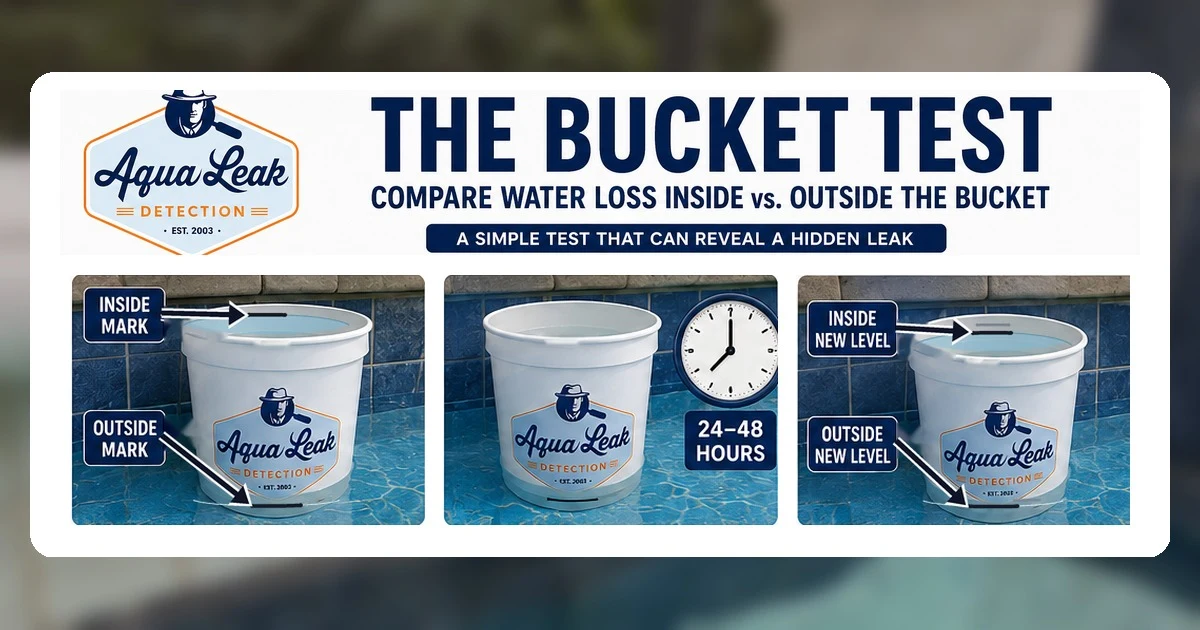
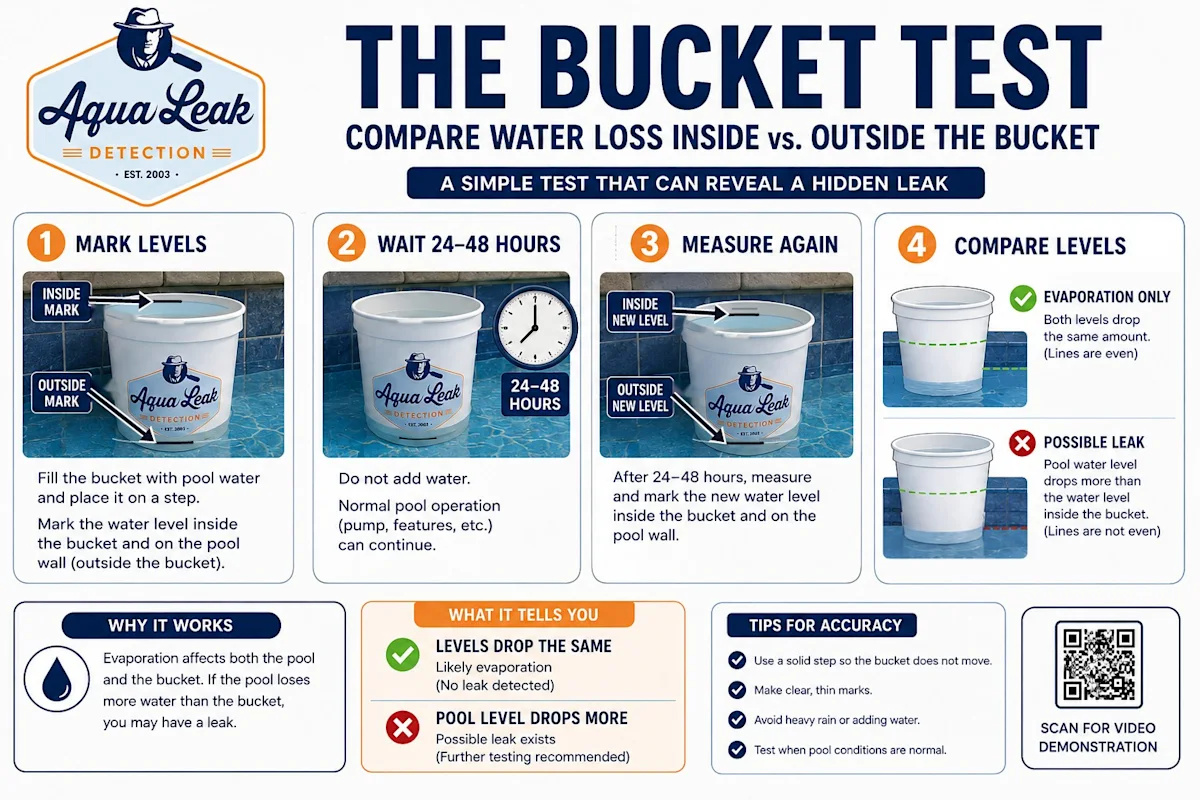
How to Do the Bucket Test
Start at your normal water level.
Do not test right after a storm or right after you topped it off.
Fill a bucket with pool water
(a 5-gallon bucket works great) and set it on a top step so it sits in the pool and stays the same temperature.
Mark the water level inside the bucket
with a strip of tape or a marker line.
Mark the pool's water level on the outside of the bucket,
or on the pool wall right beside it.
Turn off the auto-fill and skip swimming.
Normal pump operation is fine.
Wait 24 to 48 hours,
then compare both marks.
How to Read Your Results
Both levels dropped about the same:
that points to evaporation. Keep an eye on it, and remember the guideline above. If the loss is on the high side or keeps getting worse, a second test or a pro visit is smart.
The pool dropped more than the bucket:
water is going somewhere it should not. That is a possible leak, and further testing is recommended.
Want a second clue? Run the test again with the pump off. If the pool loses a lot more with the pump running, that often points to the plumbing.
Prefer to watch it done? There is a bucket test video on our home page.
Things That Can Throw Off the Test
Rain during the test
Kids (or dogs) splashing water out
An auto-fill quietly topping things off. We wrote about that one in
Backwashing the filter mid-test
Other Signs It Could Be a Leak
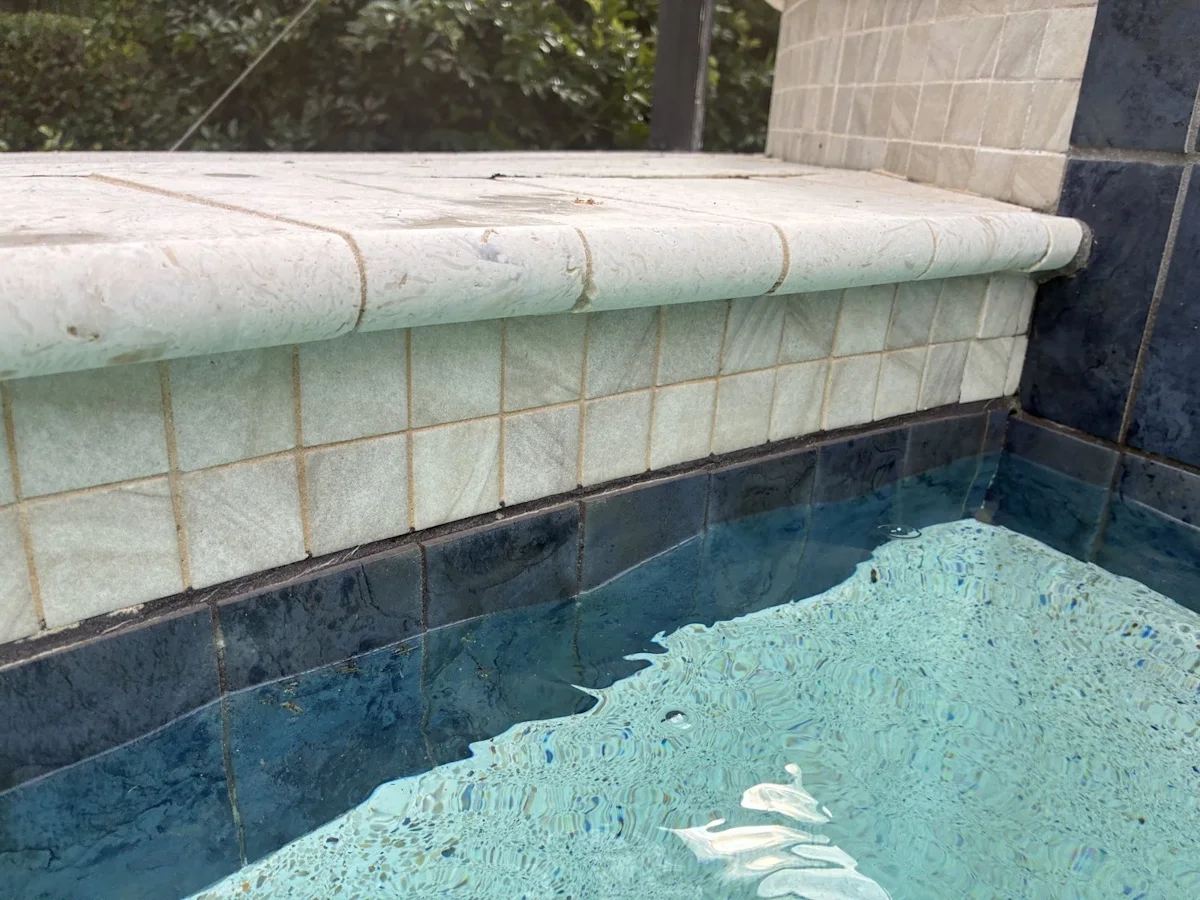
The bucket test is the big one, but also watch for wet or soft spots in the yard, cracks around the skimmer or tile line, air in the pump basket, a water bill that keeps creeping up, or a water level that always stops at the same spot, like the bottom of the skimmer or the light.
Failed the Bucket Test? Here Is What Happens Next
Please do not just keep topping it off. Leaks usually get worse, and here is what ignoring a pool leak can really cost you.
When we come out, we use what we call the Private I's: Investigate, Identify, Inform. We check everything from the tile line to the main drain, pressure test the plumbing, and use listening equipment to find leaks under the deck, so nobody digs on a hunch. Then we show you what we found with a photo report before any repair work starts. Many small leaks can be patched the same visit with underwater epoxy, with no draining needed. And if it turns out to be your equipment instead, we handle equipment repair too.
You can read more about how our pool leak detection works on our service page. Before we arrive, give the pre-arrival checklist a quick look. The big one: fill the pool to about halfway up the tile line so every possible leak spot is underwater.
Aqua Leak Detection has been chasing down pool leaks since 2003. We are based in Nokomis and serve Southwest Florida. If your bucket test says something is off, call us at (941) 270-6138 or request an appointment online. We will solve your pool leak mystery.
Bucket Test FAQs
How much water does a pool normally lose in Southwest Florida?
About 1/8 to 1/4 inch per day is typical, but it is a guideline, not a hard rule. Heated pools, spas, waterfalls, and dry, windy months sit at the high end. Losing around 1/4 inch a day is on the high side and can still be a leak, so run the bucket test or have a pro confirm.
How long should I run the bucket test?
Give it 24 to 48 hours. Keep the auto-fill off and skip swimming so the results are fair.
What if the bucket and the pool both dropped the same amount?
That points to evaporation. If the loss is high or keeps growing, repeat the test or call a pro, because a small leak can hide inside a normal-looking number.
Why is my pool losing more water in winter?
Cooler, drier, windier air pulls more water off the surface, and summer rains are not topping it off anymore. If the pool is dropping more than the bucket, though, it is time for a leak check.
Can my auto-fill hide a leak?
Yes, completely. The auto-fill replaces what is lost, so the pool looks fine while your water bill climbs. Turn it off during the bucket test.
Do I have to drain my pool for leak detection?
No. We need the water in the pool. Fill it to about halfway up the tile line so every possible leak spot is underwater.
Can you check my spa too?
Yes. We check attached spas along with the pool. Turn off the spillover during your bucket test, and we will test the spa's fittings and plumbing when we come out.
Aqua Leak Detection · 121 Triple Diamond Blvd, Unit 13, Nokomis, FL 34275 · (941) 270-6138 · Florida State Certified Pool/Spa Contractor CPC1457796